English
 Français
 Español

Sep 27,2026
China Sourcing Report · 2026
China’s Dehydrated Fruits and Vegetables Market: A Supply-Side View for Buyers
Growth forecasts tell only half the story. The real question for food manufacturers is how Chinese suppliers turn raw produce into predictable industrial ingredients.
Search for “China dehydrated fruits and vegetables market” and the first results will show billion-dollar valuations, rising CAGR, and bold regional forecasts. But for a procurement team, market size means nothing if the supplier cannot hold moisture specs, deliver on time, or trace a batch back to the field. China has become the default sourcing destination for many processed produce categories, not because it is the cheapest option under every scenario, but because its supply chain combines agricultural scale, industrial processing, and export discipline.
This article breaks down the market from the supplier side, explaining what the data actually measures, which drying processes matter, and how to evaluate a Chinese dehydration partner before placing an order.
China’s Position in the Global Dehydrated Fruits and Vegetables Market
The clearest conclusion from recent market research is that China is the anchor of the global supply network. The overall dehydrated fruits and vegetables market reached an estimated USD 27.08 billion in 2024. Within the closely watched dehydrated vegetables segment, analysts project growth from USD 7.49 billion in 2026 to USD 12.94 billion by 2034, representing a compound annual growth rate of about 7.07%. In the Asia-Pacific region, China itself accounted for 35.32% of the freeze-dried fruits and vegetables market in 2025.
| Indicator | Published figure | Procurement implication |
|---|---|---|
| Global dehydrated fruits and vegetables market, 2024 | USD 27.08 billion | A broadly stable, large category |
| Dehydrated vegetables segment, 2026 to 2034 | USD 7.49 to 12.94 billion; about 7.07% CAGR | Steady growth in industrial demand |
| China share of APAC freeze-dried market, 2025 | 35.32% | China is the regional production leader |
| China fruits and vegetables market revenue, 2025 | USD 77.7 billion | Massive domestic raw material base |
How to read these numbers: Different research firms define product boundaries differently. Use the figures to understand direction and scale, then verify a supplier’s actual capability.
Why China’s Supply Chain Works: From Field to Factory
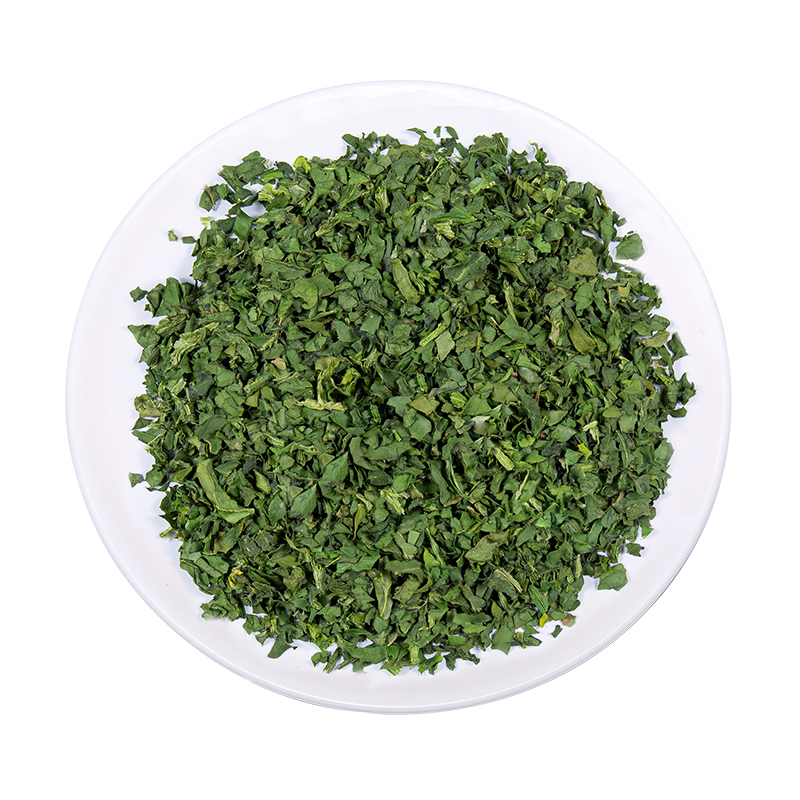
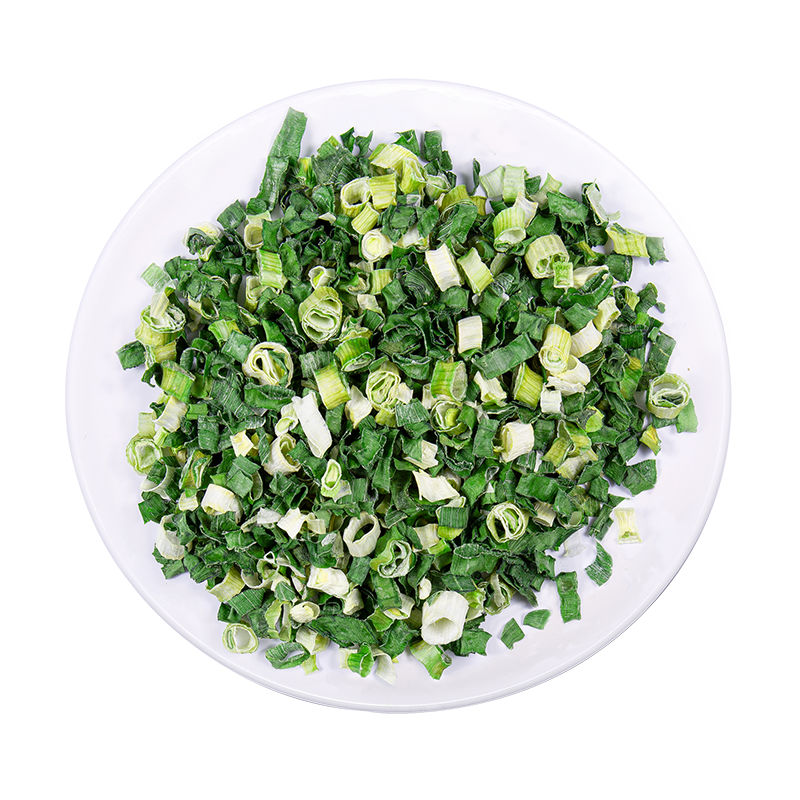
China’s real advantage in dehydration is vertical coordination. The best exporters do not sit at a computer and buy whatever vegetables arrive from wholesale markets. They manage farming bases for key crops such as carrots, leeks, Chinese cabbage, and bok choy, then locate the dehydration plant near the harvest area. A short time between cutting and drying preserves the vegetable’s color, cell structure, and nutritional value.
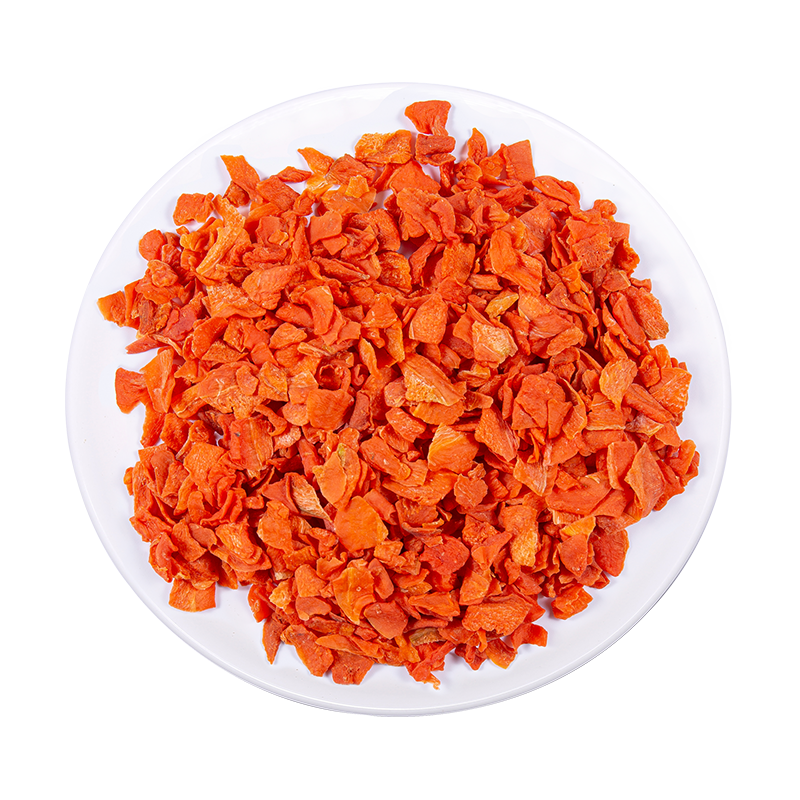
 Air-Dried Carrot Granules, Dice, and Powder from ChinaThis carrot line offers granules, dice, strips, and powder from washed, steam-peeled, blanched carrots. It supports the article's point about controlled dehydration processes that preserve color and rehydration behavior for reliable soup manufacturing.View Product →
Carrot is a useful example. A serious Chinese supplier sorts the raw carrots by size and color, washes and peels them under controlled conditions, cuts them into the required granule or dice, and then tests the finished product for moisture, bulk density, and rehydration behavior. That kind of process control is what turns a perishable farm product into an ingredient that a soup factory can rely on.
The best dehydrated vegetables are decided in the field, not in the dryer. Uniform harvest timing and fast delivery to the plant have more influence on the final product than any later adjustment.
Drying Methods: The Real Difference Behind Product Quality
Not all dehydrated vegetables are the same. The selection of drying method determines how the ingredient will behave in a recipe, how much it costs, and how long it will stay shelf-stable.
- Air drying: The workhorse for onions, garlic, leeks, carrots, cabbage, and tomatoes. It is cost-effective, but only when temperature and airflow are carefully controlled.
- Freeze drying: Ideal for heat-sensitive fruits such as apples and strawberries, as well as certain vegetables. It preserves structure and flavor, yet comes with a higher energy cost.
- Drum and vacuum drying: Common for purees and powders. The process alters particle shape and can change how the ingredient mixes with water.
For a fuller picture of what happens between raw material intake and the packed export lot, see our step-by-step overview of how dehydrated vegetables are made. The details matter because drying time and temperature directly affect color, aroma, and rehydration speed.
Procurement warning: If a quote is far below the market average, ask for moisture range, particle size distribution, and a rehydration test before you approve the sample. Low price often means high temperature, uneven cuts, or raw material that was not sorted properly.
Supplier Evaluation: What to Check Before Sourcing From China
The biggest risk in the China dehydrated fruits and vegetables market is not availability; it is variance between suppliers. The checklist below is designed to separate a genuine processing partner from a broker who simply packs goods from multiple sources.
- Certification level: Look for BRC A or A+, IFS, HACCP, and other internationally recognized food safety standards. Certification alone is not enough, but it shows how seriously the factory treats quality systems.
- Raw material traceability: Does the supplier run its own farming base, work with contract farmers, or rely on anonymous market purchases? The first option is easier to audit.
- Production capacity: Ask about annual tonnage and the ability to maintain the same spec across multiple harvests. Capacity matters less than repeatability.
- Process control: Color sorting, cut size tolerance, metal detection, moisture checks, and lot coding should be visible during a factory audit.
- Shipping documentation: Certificates of analysis, phytosanitary certificates, and complete lot traceability should arrive with every order.
Dehydrated Onion Flakes, Dice, Granules, and PowderSourced from field-fresh onion bulbs, this product range includes flakes, dice, granules, and powder. It appears in the discussion on choosing a genuine processing partner rather than a broker, highlighting consistent quality and versatile food applications.View Product →
Signs of a dependable supplier: clear product photography, a real factory address, published certification details, and a technical contact who can discuss raw material origin and drying curves instead of only price.
Regional Production: The Geography Behind the Market
China’s dehydration industry has developed around specific crops in specific regions. A decentralized production model gives buyers a broader sourcing window and reduces the risk of a single bad season. In our own network, the Jiangsu factory processes small greens, carrots, cabbage, onion, and sweet potato, with an annual capacity of around 4,000 to 5,000 tons. The Inner Mongolia factory, built closer to the country’s northwestern growing belt, focuses on green pepper, red pepper, tomato, pumpkin, and onion, with annual capacity of 2,000 to 3,000 tons.
| Factory region | Core products | Annual capacity |
|---|---|---|
| Jiangsu | Spring onion, carrot, Chinese cabbage, onion, sweet potato | 4,000 – 5,000 tons |
| Inner Mongolia | Green pepper, red pepper, tomato, pumpkin, onion | 2,000 – 3,000 tons |
This regional split is not a coincidence. Peppers and tomatoes need long sunshine hours and a concentrated harvest window; leafy and root vegetables benefit from the milder climate and established processing infrastructure of the eastern Jiangsu plain. When both regions work together, a buyer gets longer seasonal coverage and a wider product portfolio.
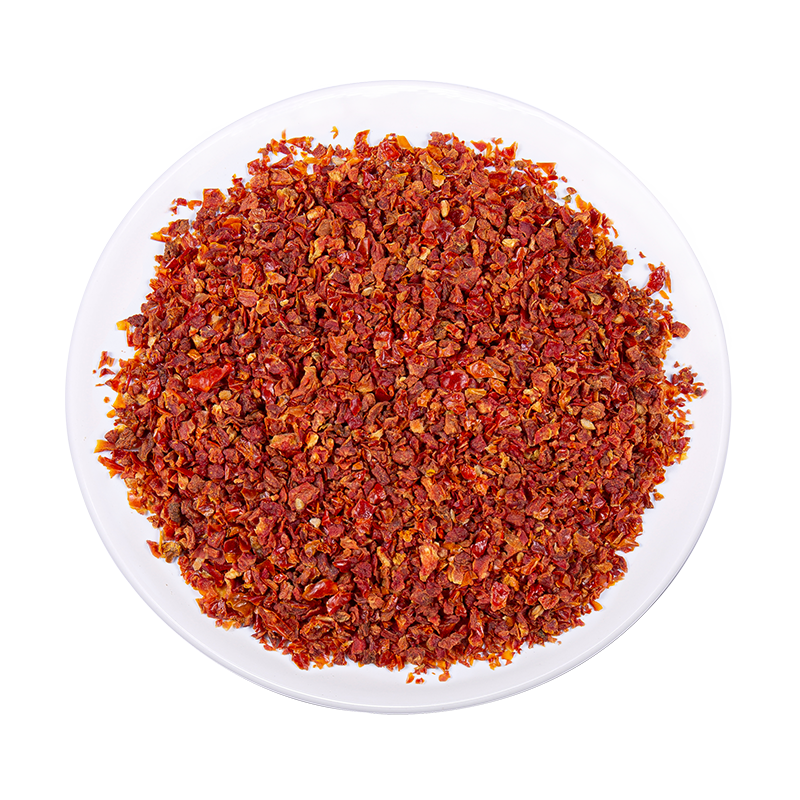
Dehydrated Tomato Flakes, Powder, and Diced PiecesMade from washed, cored, trimmed, and dried tomatoes, this range includes flakes and powder suited for convenience foods, seasoning blends, and baked goods. The card emphasizes matching product form to the intended application, as noted in the accompanying text.View Product →
Processing close to the harvest area is not a logistics preference; it is a quality strategy. The shorter the field-to-factory distance, the less the raw material can lose before drying begins.
Turning Market Trends Into Sourcing Decisions
The same forces that drive global demand for convenience meals, healthy snacks, and plant-based products also make the choice of ingredient specification more important. It is not enough to buy “dehydrated tomato” or “dehydrated onion”; the supplier needs to understand the application. A tomato powder that performs in a wet sauce may not be suitable for a dry seasoning blend.
Three factors that influence the price of a dehydrated product
- Raw material grade and seasonal availability
- The drying method and the energy required to run it
- Cut size, sorting complexity, and final yield from fresh to finished product
One common mistake: generalizing a spec across recipes. Always test samples under the exact water temperature, soak time, acidity, and processing heat your own factory uses.
Market trends also explain why buyers increasingly look for fruit and vegetable powders in addition to traditional flakes and granules. The production techniques are different, but the underlying sourcing logic is the same: China offers the scale to stabilize raw materials, and the processing expertise to meet a precise industrial requirement. A direct conversation with an experienced Chinese dehydrated fruits and vegetables manufacturer is often the fastest way to separate market-level theory from factory-level reality.
The Bottom Line
The China dehydrated fruits and vegetables market is not one undifferentiated source. It is a network of regional harvests, processing technologies, and suppliers with very different levels of control. Global demand will continue to rise, and China will remain central to that supply because it combines agricultural scale with industrial maturity.
For a buyer, the opportunity is to treat China as a strategic sourcing market rather than a spot market. The difference between a dependable shipment and a costly one is decided by the same factors every time: raw material traceability, drying discipline, certification depth, and the supplier’s ability to reproduce a finished specification batch after batch.