English
 Français
 Español

Oct 19,2026
Preserving Guide · Peppers
Dehydrating Peppers for Powder: Temperatures, Yields, and Storage Done Right
Sweet bells, jalapeños, and thin-walled chilies all dry down into vivid, long-keeping powder - provided the heat stays low, the pieces finish brittle, and the jar closes fast.
Weigh a pound of ripe red bell peppers, then weigh what comes off the trays: usually little more than an ounce and a half. Peppers run about 90 percent water, so dehydrating them for powder is less a recipe than a controlled disappearance - and what survives it, the color, the sweetness, the heat, is decided before and after drying, not during.
The short version: slice thin and even, dry low and slow at 125°F / 52°C, grind only what snaps, and seal the powder away from light within hours of milling. Follow those four rules and pepper powder keeps its color and character for a year; rush any one of them and the result is brown dust at best, mold at worst. The sections below work through each decision, then look at how the same variables are controlled when peppers are dried for powder at industrial scale.
Why Peppers Take to the Dehydrator So Well
Peppers are cooperative drying subjects. Their flesh is dense but not sticky, their pigments and aroma compounds hold up at low drying temperatures, and both sweet and hot varieties carry their value in a thin layer of dry matter that grinds cleanly once crisp.
Variety decides the powder's character before any heat is applied. Fully ripened red bells concentrate sugars and carotenoids, giving a sweet, paprika-style powder with deep red color. Green peppers keep a sharper, more vegetal edge that anchors seasoning blends and dry rubs. Hot varieties such as jalapeño retain nearly all their capsaicin through drying, so a little powder goes a long way. Wall thickness sets the schedule: thick-walled bells take the longest, while thin-walled chilies finish hours earlier.
Commercial buyers work the same logic in reverse, specifying the finished powder they need - color, heat level, flavor profile - and choosing the raw variety and ripeness that will deliver it. That is why pepper sourcing for food manufacturing starts in the field, not at the dryer door.
 Dehydrated Red PepperFresh Red Bell Peppers which are washed, cored, trimmed, diced and dried.The processing sequence initiates with rigorous cleaning protocols, material segregation, and ...View Product →
Prep: Small, Even Cuts and Clean Cores
Prep determines drying speed and evenness more than any dial setting. The aim is uniform pieces with nothing hidden inside: membranes and seed clusters hold moisture, and in sweet varieties the pale inner ribs can turn bitter.
- Wash the peppers and dry the skins.
- Remove the stem, core, seeds, and pale ribs.
- Set the heat level: leaving some seeds and membrane in hot peppers raises the powder's fire; stripping everything softens it.
- Cut into even strips or 1-2 cm dice so every piece dries at the same rate.
- Spread in a single layer with air space between pieces; crowding is the most common cause of uneven drying.
A quick blanch is sometimes suggested to soften skins and speed drying; it adds a handling step and tends to dull color, so most pepper-powder makers skip it. Skins stay on - they grind fine and carry pigment.
Hot varieties need one more layer of care, and jalapeños are the usual case: their oils transfer to skin and cutting boards, then become airborne as dust the moment grinding starts.
Dehydrated JalapenoFresh green jalapeno peppers which are washed, trimmed, diced and dried. The processing sequence initiates with rigorous cleaning protocols, material segregation, and ...View Product →
Warning
Wear gloves when cutting and seeding hot peppers, keep hands away from your face, and ventilate the room. When grinding hot varieties, capsaicin dust goes airborne - a dust mask is inexpensive insurance.
Three Drying Routes, and the Temperatures That Matter
A food dehydrator is the reference method because it holds a steady 125°F / 52°C - warm enough to pull moisture out, cool enough to protect the carotenoids that make red powder red. Hot chilies are often run slightly warmer, around 135-140°F, since their thinner flesh dries fast and tolerates the extra push.
Dehydrator: the reference method
Single layer, trays spaced normally, 8 to 12 hours for dice and less for thin strips. Rotate trays once or twice if the machine dries unevenly.
Oven and air fryer: workable alternatives
An oven works at its lowest setting with the door cracked, trays rotated hourly; color comes out a little duller because ovens cycle hot. Air fryers handle small batches at low heat, though the fan can blow lightweight pieces around - a mesh liner fixes that. Some cooks run ovens at 200-225°F and finish in under two hours; that shortcut trades color and aroma for speed, so watch the trays closely.
| Method | Typical setting | Typical time | Where it fits |
|---|---|---|---|
| Food dehydrator | 125°F / 52°C; 135-140°F for thin-walled hot chilies | 8-12 hours | Reference method; steadiest low heat, best color |
| Oven | Lowest setting, door ajar | 4-8 hours | No special equipment; slightly duller color |
| Air fryer | Lowest heat, low fan | 2-4 hours | Small batches; a mesh liner keeps pieces in place |
| High-heat shortcut | 200-225°F | 1.5-2.5 hours | Speed over color; check often |
Info
Treat 125°F / 52°C as the default. If your equipment only offers coarse steps, pick the lower one and add time - slow and slightly longer beats fast and brown every time.
The Snap Test, Then Conditioning
The most reliable doneness check is a sound, not a look. A piece ready for powder is brittle: it cracks when bent and shatters when struck. Leathery pieces still hold water, and ground while soft they produce powder that clumps and later cakes in the jar.
Dry enough for powder is something you hear - brittle pieces crack when bent, and anything that bends still has water in it.
Conditioning adds a margin of safety before milling. Loose-fill a clean glass jar with the dried pieces and shake it once a day for a week to ten days. Condensation on the glass means moisture is still moving and the batch goes back on the trays; a jar that stays clear for ten days holds a stable product, ready to grind.
Success
Test a piece from the center of the tray, not the edges - center pieces always finish last. If it snaps cleanly with no dense core, treat the whole batch as done.
Grinding, Yield, and Bringing the Powder Back
Mill in short pulses rather than one long run - a grinder heats up, and heat dulls color and aroma. Sift the result through a fine sieve for uniform powder and keep the coarse fraction as flakes: one batch, two products.
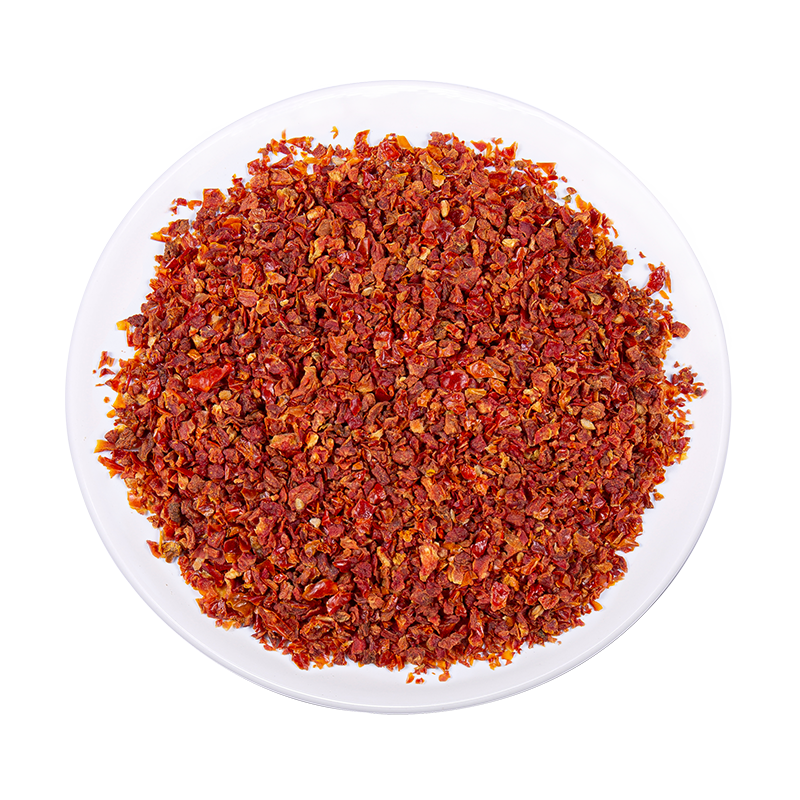
Yield is worth knowing up front. With roughly 90 percent of the weight leaving as water, expect close to a ten-to-one reduction: a pound of fresh sweet bells lands near an ounce and a half of dried pieces, which mills down to about a third to half a cup of powder. Thin-walled hot chilies dry a little heavier per pound because there is less water to lose.
To reconstitute, stir one tablespoon of powder into two tablespoons of water for a spreadable paste that works into rubs, sauces, and marinades; in soups, stews, and chili, sprinkle it in dry and let the pot do the work. Pepper powder is also part of a wider category of milled produce - the benefits and effects of fruit and vegetable powders make a useful follow-up read if you plan to dry other crops alongside peppers.
Storage: Where Powder Quality Is Won or Lost
Ground powder exposes enormous surface area, so it fades faster than whole dried pieces. Airtight glass, a dark cupboard, and a cool room are the standard; keep jars away from the stove, where heat cycles slowly strip color. Label each jar with the variety and date - after a few months on the shelf, sweet powder and hot powder look identical.
Color and punch are strongest in the first six to twelve months, and the powder remains usable well beyond that; oxygen absorbers slow the fading for long storage. If the powder is meant for gifting or selling, grinding closer to the day it leaves your hands preserves more of what drying worked to keep.
Danger
Mold is the one failure that cannot be fixed. If powder cakes, smells musty, or shows condensation inside the jar, discard the batch - and never grind peppers that still bend, because trapped moisture is exactly what mold needs.
When the Batch Outgrows the Kitchen
At commercial scale, every variable above hardens into a specification. The snap test becomes a moisture target in the low single digits; sifting by eye becomes defined mesh grades, with fine seasoning powders commonly milled to around 80 mesh; tray times become controlled drying curves designed to hold color; and the whole process runs under audited food-safety systems. Buyers specify origin, variety, mesh size, moisture, and microbiological limits - which is why pepper powder for food manufacturing comes from dedicated processors.
One working example is Jiahe Foods, a Chinese dehydrated vegetable factory founded in 2003, which runs dedicated pepper lines at its Inner Mongolia plant - opened in 2023 and described by the company as northwest China's largest green and red pepper base - with planting and processing joined in one supply chain and BRC certification held at A+ level since 2024. Its two plants list a combined annual capacity of roughly 6,000 to 8,000 tons, and an expansion due to complete at the end of 2026 adds natural fruit and vegetable powder lines alongside the existing products.
For food manufacturers, buying finished dehydrated green pepper, red pepper, or jalapeño as flakes, dice, or milled powder means trading the variables in this guide for lines on a datasheet. The physics stays the same at both ends of the scale: low heat, full dryness, fast sealing. The equipment changes; the standards do not.
Dehydrated Green PepperField fresh green bell pepper which are washed, cored, trimmed, diced and dried.The processing sequence initiates with rigorous cleaning protocols, material segregatio...View Product →The Short Version
Dehydrating peppers for powder is a forgiving process with a few unforgiving points. Held together, the whole method fits in five lines:
- Dry at 125°F / 52°C, or the closest lower setting your equipment offers.
- Grind only pieces that snap, and condition the batch in a jar for a week first.
- Expect roughly a ten-to-one weight loss from fresh to dried.
- Store airtight, dark, and cool, labeled with variety and date.
- Discard any batch that cakes, musts, or fogs the jar from the inside.
Get those five right and a September harvest still tastes like September well into the new year.