English
 Français
 Español

Food Science & Texture
A close reading of moisture, starch, and structure — and what actually happens when water leaves a potato and later returns.
In short, dehydrated potato products are drier, denser, and more uniform in texture than fresh potatoes — yet once rehydrated, they can closely approximate, though rarely perfectly replicate, the mouthfeel of a freshly cooked potato. The difference lives in moisture content, cell wall integrity, and how starch behaves under heat and time.
Why Dehydration Changes Potato Texture
Fresh potatoes are made up of roughly 75–80% water, with the remainder consisting of starch, fiber, and small amounts of protein and sugar. When a potato is dehydrated, that water is removed through controlled heat and airflow, typically reducing moisture content to below 8%. This dramatic loss of water fundamentally alters the potato's cellular architecture — and it is the starting point for everything that follows.
Cell Wall Collapse and Starch Gelatinization
During cooking and drying, potato starch granules absorb water and swell — a process known as gelatinization. As water is later driven off during dehydration, the starch structure sets in a way that changes how it rehydrates. Cell walls that once held moisture in a plump, turgid state collapse and compress, which is why a piece of dehydrated potato looks shrunken and rigid compared to its fresh counterpart. This collapse is largely irreversible at the cellular level — the texture, once transformed, does not fully reverse.
Processing Method Determines Final Texture
Not all dehydrated potato products are made the same way, and that variation shapes the final result. Potatoes destined to become flakes are cooked, mashed, then dried on rotating drums — a process that breaks starch chains into small, uniform particles. Potatoes destined to become slices are blanched, cut into shapes, and dried whole, preserving far more of the original cell structure. Two different processes, two very different textures.
A small shift in processing — mash versus slice, drum-dried versus air-dried — produces two textures so different that one becomes a smooth purée and the other a firm, structured bite.
Texture Profile of Dehydrated Potato Flakes
Among all dehydrated potato formats, flakes are engineered specifically for smoothness. Before rehydration, dehydrated potato flakes feel light, dry, and almost snow-like, with individual flakes measuring just a few millimeters across. Their low density means a small volume expands significantly once liquid is introduced.
When hot water or milk is added, the flakes rehydrate within one to two minutes, forming a smooth, creamy paste with minimal lumps. Because the drum-drying process pre-gelatinizes the starch and breaks down cell clusters into fine particles, there is little fibrous resistance left to create graininess. The result is often described as slightly softer and more uniform than hand-mashed fresh potatoes, which retain small lumps and fibrous strands depending on variety.
This smoothness is why flakes are favored in large-scale foodservice, where consistency across thousands of servings matters more than rustic texture — and why they double as a thickening or binding agent in soups, dough, and processed foods.
dehydrated potato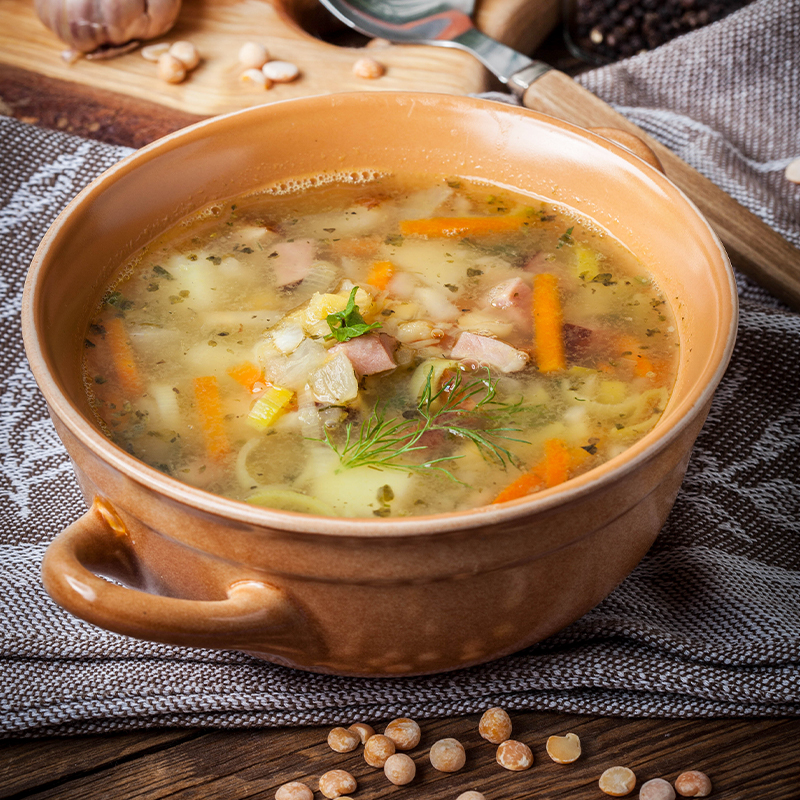
Texture Profile of Dehydrated Potato Slices
Unlike flakes, dehydrated potato slices are designed to hold their shape and structural integrity. Because the potato is cut and dried as a solid piece rather than mashed, more of the original cellular architecture survives.
Dry slices are rigid and brittle, snapping cleanly when bent — a direct result of water loss within intact cell walls. Rehydrated in water, broth, or sauce over 10 to 20 minutes depending on thickness, the slices soften considerably but retain a noticeably firmer bite than fresh boiled potatoes: slightly chewier, denser, with subtle resistance under a fork.
That firmness is a functional advantage. In slow-cooked stews, gratins, or casseroles, slices that hold their shape prevent a dish from turning mushy — a common risk with overcooked fresh potatoes.
Info
Rehydration speed depends heavily on liquid temperature. Hot liquid near 85–95°C produces the smoothest results for flakes, while a gentle simmer suits slices best.
Side-by-Side Texture Comparison
The table below summarizes how each form compares to fresh potatoes across common textural attributes, based on typical rehydration and cooking outcomes.
| Attribute | Fresh Potato | Dehydrated Potato Flakes | Dehydrated Potato Slices |
|---|---|---|---|
| Moisture Content | 75–80% | 6–8% (pre-rehydration) | 6–8% (pre-rehydration) |
| Mouthfeel | Moist, slightly fibrous | Smooth, creamy | Firm, chewy |
| Uniformity | Variable by cut and variety | Highly consistent | Consistent shape retention |
| Rehydration Time | N/A | 1–2 minutes | 10–20 minutes |
| Best Suited For | Whole dishes, roasting, frying | Mash, purées, thickeners | Stews, gratins, soups |
Factors That Influence Final Texture Outcomes
Several variables affect how closely a rehydrated dehydrated potato product will resemble fresh potato texture. Understanding these lets users fine-tune results for a specific application.
Rehydration Ratio and Liquid Temperature
Too little liquid produces a dense, pasty consistency; too much produces something thin and watery. Hot liquid tends to smooth out flakes, while slices benefit from a gradual simmer that lets moisture penetrate evenly.
Potato Variety Used Before Drying
As with fresh potatoes, the starch-to-moisture ratio of the original variety carries through. Higher-starch varieties tend to produce fluffier, drier results — often preferred for flakes — while lower-starch, waxier varieties hold shape better, suiting slice production.
Particle Size and Thickness
Thicker slices retain more chew and structure; thinner slices soften faster, sometimes approaching fresh-potato tenderness. Finer flake particles rehydrate more evenly into a smoother mash, while coarser flakes retain slightly more texture.
Matching Texture to Practical Applications
Because texture varies so much between formats, selecting the right dehydrated potato product is largely a matter of matching expectations to intended use.
- For smooth mashed potatoes, shepherd's pie topping, or potato bread — dehydrated potato flakes deliver the most consistent, lump-free result.
- For soups, stews, casseroles, or gratins where visible pieces matter — dehydrated potato slices hold shape and offer a heartier bite.
- For snack production such as chips or crisps — finely milled dehydrated potato reforms into sheets that fry to a crisp, uniform texture.
- For bulk storage or emergency provisioning — both flakes and slices remain palatable and functional well beyond typical fresh-potato shelf life.
Tip
Add fats such as butter or cream after rehydration rather than before — this rounds out mouthfeel and softens some of the density dehydration introduces.
Tips for Achieving Fresh-Like Texture
- Use warm or hot liquid rather than cold water to speed rehydration and smooth texture.
- Avoid over-mixing rehydrated flakes — excess stirring releases starch and creates gumminess.
- Simmer slices gently rather than boiling vigorously, reducing the risk of a chalky center.
- Let rehydrated products rest a few minutes — texture continues to settle after initial absorption.
Note
No dehydrated format perfectly duplicates the texture of a freshly harvested potato — but with the right handling, the gap becomes difficult to notice in the finished dish.
In Closing
With the right preparation, dehydrated potato products deliver texture that satisfies both convenience and quality — whether the goal is a silky-smooth mash or a structured, hearty piece in a slow-cooked dish. The mechanics behind each format's behavior are what make texture predictable, and predictability, in the end, is what makes these products so widely trusted across kitchens and production lines alike.