English
 Français
 Español


Nov 19,2026
STORAGE AND QUALITY
The Shelf Life of Dehydrated Vegetables Is a Chain, Not a Number
A practical guide to moisture, packaging, temperature, product type, and the quality systems that turn a storage claim into a working specification.
Most commercially dehydrated vegetables remain at their best for roughly 12 to 24 months when moisture, oxygen, heat, and packaging are controlled. That is the range food manufacturers can plan around. Longer claims exist, but they belong to specific products, specific packaging, and specific definitions of "still good."
A buyer does not need a heroic number. A buyer needs a reproducible storage specification: water activity at release, barrier level, warehouse temperature, and the sensory limits that trigger rejection. The shelf life of dehydrated vegetables is therefore a chain of controls, not a calendar page.
Why the shelf life of dehydrated vegetables is not one number
Public food-preservation guidance is a useful starting point. Home-dried fruits are often given about one year at 60 F or six months at 80 F, with vegetables roughly half that window. Commercial dehydration can exceed those figures because pieces are dried more evenly, packed in barrier film, and moved through a controlled warehouse. Claims of eight to ten years are possible in home storage, but they depend on near-perfect drying and oxygen-free packaging. They are not a default commercial promise.
The useful distinction is not just dehydrated versus dried; it is between safety, sensory quality, nutrition, and microbial stability. A product may be safe at 24 months and still fail a buyer's colour, aroma, or rehydration test. The practical difference between dehydrated and dried vegetables matters because the process and the moisture target shape the storage curve.
"A reliable shelf life is not printed on a bag. It is built into the drying curve, the barrier film, the warehouse, and the release specification."
Four variables that move the clock fastest
Storage time is usually lost through small, cumulative changes rather than one dramatic failure. The variables below are the ones a food manufacturer can measure, specify, and control.
- Moisture and water activity: residual moisture feeds colour drift, caking, and microbial risk. Water activity is often more useful than a moisture percentage alone because it describes the water available to reactions and microbes.
- Oxygen: oxidation fades green vegetables, darkens some cuts, and changes aroma. Nitrogen flushing or oxygen absorbers help only when the package retains the modified atmosphere.
- Heat: every increase in warehouse temperature accelerates browning, vitamin loss, and off-flavour development. A cool, stable room is more valuable than a short burst of cold air.
- Light: retail lighting and open warehouse shelving can bleach colour and trigger oxidation. Opaque or light-blocking packaging is a practical safeguard.
Cut size belongs in this list as a secondary factor. A large piece may dry slowly and hold moisture in the centre, while a fine granule absorbs oxygen and moisture across a much larger surface. The right specification therefore depends on the form the customer will receive.
Product type changes the answer
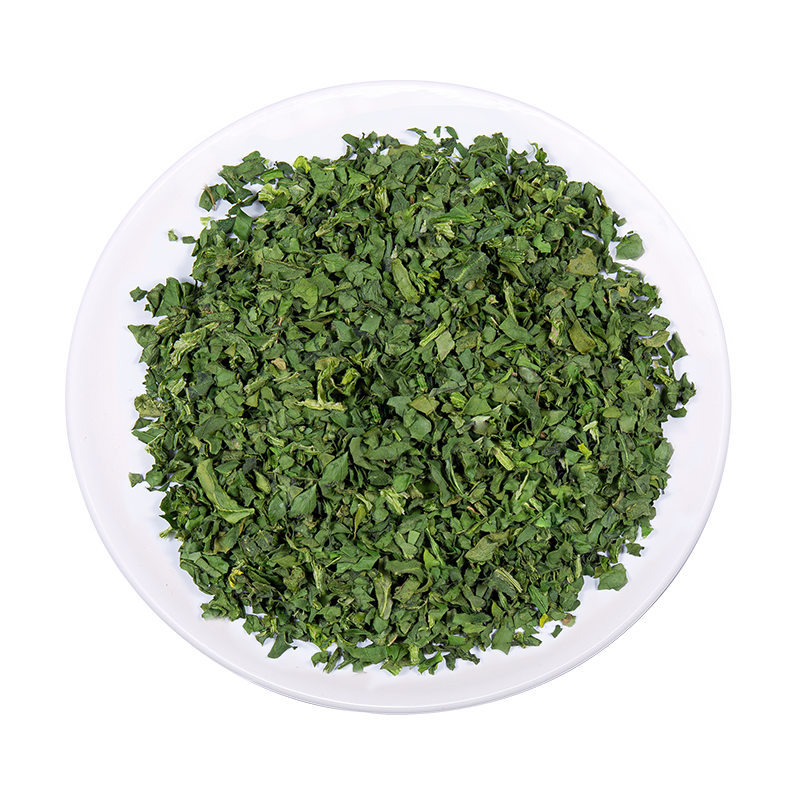
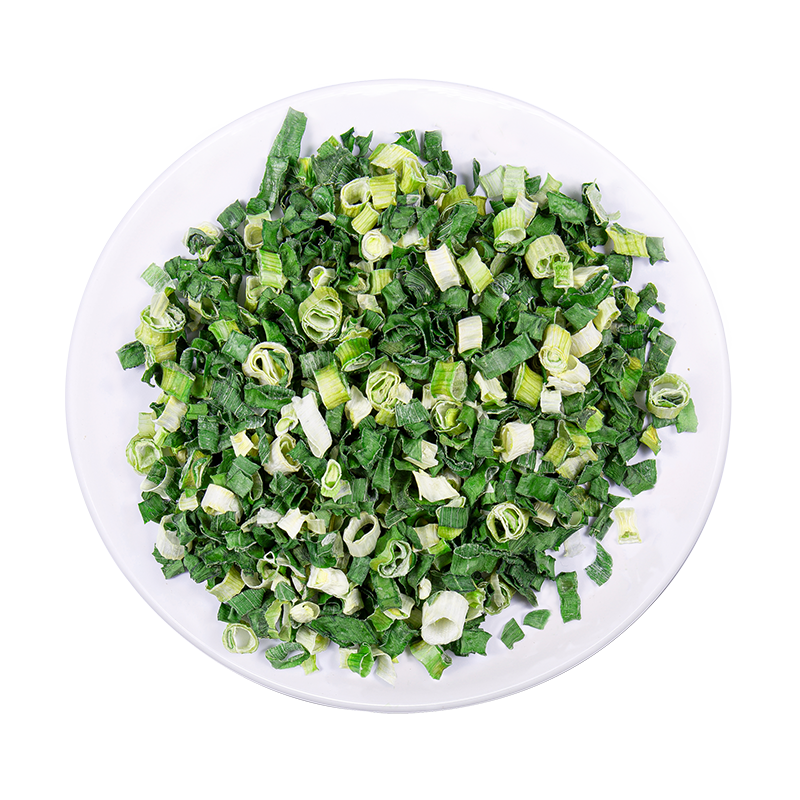
Leafy vegetables, root vegetables, fruit vegetables, and seasoning vegetables do not age at the same rate. Cabbage, spinach, and leek can lose colour quickly if oxygen and light are not controlled. Carrot and potato pieces are more tolerant, but they can still develop off-notes when moisture migrates. Tomato, pumpkin, and red pepper carry sugars and acids that make caking and browning more visible. Onion and garlic are valued for aroma, which means oxidation is a quality issue even when the product remains safe.
Dehydrated onion is a good example of a product that must be judged on flavour retention, not only moisture. A buyer specifying a 24-month window should ask for sensory checks at release, six months, twelve months, and the end of the claimed period.
 Dehydrated Onion for Flavour Retention and Shelf-Life ReviewAir-dried onion in chopped, minced, and powder cuts; suited to seasonings, soups, sauces, and snacks, with sensory checks supporting long shelf-life evaluation.View Product →
Packaging and storage decide whether 12 months becomes 24
A good dryer can be undone by a weak bag. High-barrier film, a secure seal, and a clean filling environment slow moisture ingress and oxygen exchange. Larger drums and foil-lined sacks are common for industrial buyers, while smaller packs need a reliable closure and a realistic headspace. Nitrogen flushing is useful only when the film and seal hold the gas over time.
Warning: a pinhole or a weak seal is not a cosmetic issue. It creates a path for moisture and oxygen, and the resulting quality loss often appears at the customer's production line rather than at the supplier's warehouse.
The table below gives indicative windows, not a guarantee. A written specification should tie each window to a water activity target, a packaging structure, and an agreed sensory standard.
| Storage scenario | Indicative window | Primary risk |
|---|---|---|
| Ambient warehouse, sealed standard bag, 20-25 C | 12-18 months | Gradual moisture and oxygen ingress |
| Cool controlled warehouse, high-barrier pack, 10-15 C | 18-24 months | Quality drift slowed but not stopped |
| Home-dried, airtight container, 60 F | About 12 months | Vegetables are often given about half the fruit window |
| Home-dried, airtight container, 80 F | About 6 months | Heat accelerates browning and off-flavour |
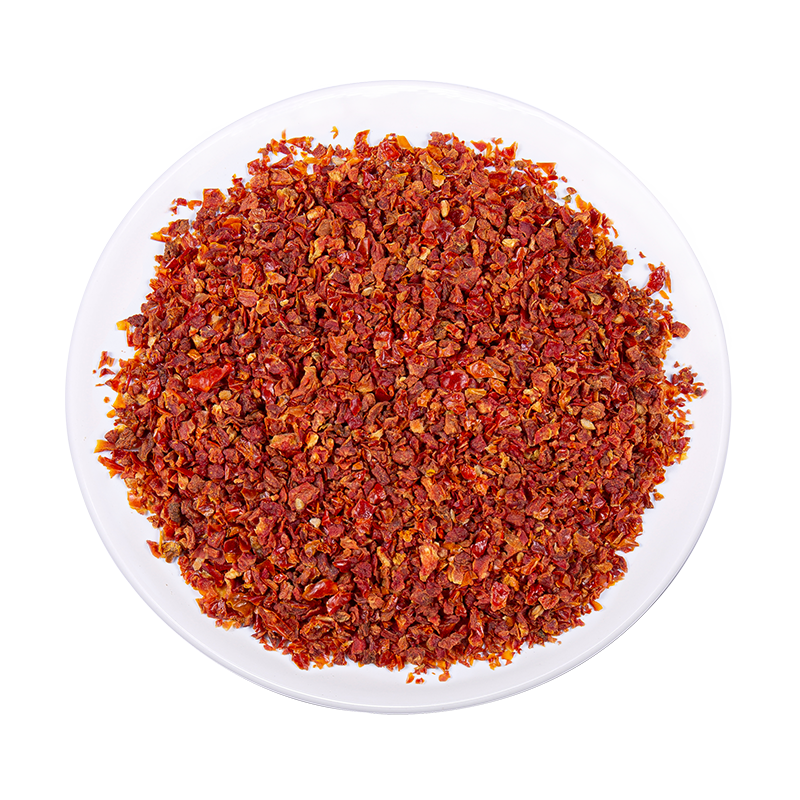
Tomato pieces and similar sugar-bearing products need particular attention because visible caking or darkening can end a specification before microbial limits are reached.
Dehydrated Tomato Flakes and Powder for Food ManufacturingDried tomato in flake, dice, granule, and powder forms for soups, sauces, baking, snacks, and pet food; useful where caking and darkening need shelf-life checks.View Product →How buyers verify shelf life before a container ships
A shelf-life claim should be supported by release data and a storage trial, not by a label printed from a template. The checks below are practical for procurement, quality, and product development teams.
- Review the water activity and moisture specification for the exact cut and product form.
- Confirm the packaging structure, seal integrity, and any nitrogen-flush or oxygen-absorber step.
- Ask for sensory benchmarks at release and at agreed intervals during the claimed period.
- Check the production code, packing date, and warehouse temperature records.
- Run a customer-side storage trial with the intended pack size and use environment.
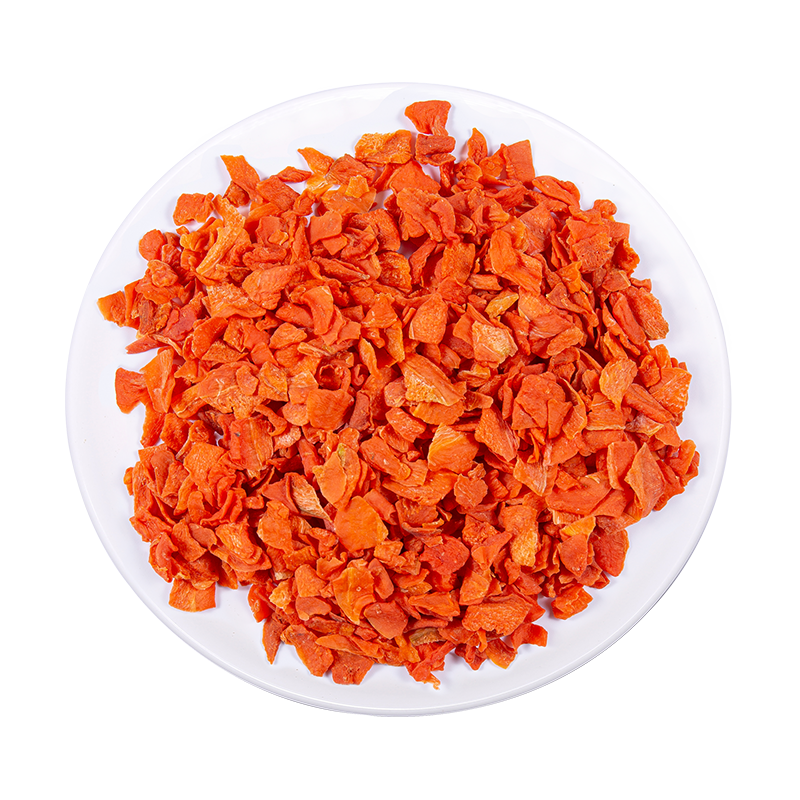
Supplier capability matters because shelf life is affected by raw material control, drying consistency, and lot discipline. At Xinghua Jiahe Foods, BRC A+ certification, two production sites, and a combined annual capacity in the range of 6,000-8,000 tonnes support a more controlled conversation about moisture, packaging, and release standards. Root crops such as carrot are useful for buyers who need a stable, high-volume line with clear quality checkpoints.
Dehydrated Carrot for Stable High-Volume Ingredient SupplySteam-peeled, blanched, and dried carrot in cross-cut, shoestring, and powder forms; HACCP-compliant processing supports seasonings, soups, ready meals, and pet food.View Product →A practical storage specification
A workable specification should be short enough for a warehouse team to follow and precise enough for a quality team to audit. It can be reduced to four operating rules.
- Keep the product cool and stable, preferably below 25 C, with no sharp temperature swings.
- Store away from light and strong odours; dehydrated vegetables absorb both.
- Keep bags sealed and off the floor, with first-in, first-out stock rotation.
- Reject any lot with damaged packaging, visible caking, or a moisture result outside the agreed limit.
Info: a storage trial is more convincing than a theoretical calculation. Test the actual pack, the actual warehouse, and the actual sensory standard the customer will use.
The bottom line
For commercial planning, the shelf life of dehydrated vegetables is usually a 12-24 month conversation, not a decade-long promise. Product type, water activity, oxygen exposure, packaging, and warehouse discipline decide where a lot falls inside that range. Buyers should ask for measurable release data, a realistic storage standard, and sensory checkpoints that match their own finished product. That approach turns shelf life from a marketing phrase into a supply specification that holds up after the container leaves the dock.