English
 Français
 Español

Oct 19,2026
You just brought in a heavy harvest of jalapenos, or you finally cleared the crisper drawer of three pounds of bell peppers that need a future. The dehydrator sits on the counter, and one setting will decide whether you end up with bright, crisp pepper flakes or a batch that turns leathery, dull, and prone to molding a few weeks later. The best temperature to dehydrate peppers is 135°F (57°C) for most home dehydrators. The full working range is 125°F to 145°F, and where you land inside that range depends on the pepper variety, how evenly you slice, and whether you plan to grind the dried pieces into flakes or powder.
Why the drying temperature decides the outcome
Dehydration is not just about removing water. It is about removing it fast enough that bacteria and mold never get a chance to establish, but slowly enough that the peppers keep their color, capsaicin content, and structure. The temperature you choose controls that balance.
If you dry below 120°F (49°C), the peppers can sit in the damp, warm zone for several hours. Enzymes stay active during that window and start breaking down pigments, which is why peppers dried at low temperatures often come out dark brown instead of bright red. The extended drying time also raises the risk of fermentation, especially for thick-walled peppers that release moisture slowly.
If you dry above 145°F (63°C), the surface dries quickly and forms a hard shell. The moisture inside cannot escape, so the interior stays soft and can spoil even though the outside feels dry. This effect, called case hardening, is one of the most common causes of dried peppers that seem fine at first but grow mold during storage.
At 135°F, the peppers move through the wet phase quickly enough to stay safe, but the heat is still gentle enough to preserve color and heat. It also gives you a margin of error: a dehydrator dial that reads slightly off will still land you in a usable zone.
Best temperature by pepper type
Thin-walled peppers such as cayenne and Thai chilies dry quickly and become brittle. Thick-walled varieties like bell and poblano hold significantly more water and need a slightly higher temperature to dry all the way through in a reasonable time. Use the table below as your starting point.
| Pepper type | Examples | Best temperature | Typical time | Done when |
|---|---|---|---|---|
| Thin-walled | Cayenne, Thai chilies, serrano | 125°F (52°C) | 4-8 hours | Snaps cleanly when bent |
| Medium-walled | Jalapeno, Anaheim | 130-135°F (54-57°C) | 6-10 hours | Leathery, then crisp |
| Thick-walled | Bell, poblano | 135-140°F (57-60°C) | 8-14 hours | Firm with no soft spots |
| Superhots | Ghost, Reaper, scotch bonnet | 130-135°F (54-57°C) | 8-14 hours | Crackly when pressed |
Uniform slicing matters more than a degree or two of precision. Cut the peppers into 1/4-inch strips or rings so every piece finishes at roughly the same time. If some slices are twice as thick as others, the thinner pieces will be overdried by the time the thick ones lose their moisture.
Superhots deserve a practical warning. Capsaicin vapor is released during drying and can linger in the air and irritate your throat and eyes. Run the dehydrator in a garage or a room with good ventilation, and give the lid a few minutes after opening before you reach in.
If you are using an oven instead of a dehydrator, the same finished texture applies, but most ovens only go down to 170°F to 200°F (77-93°C). That works if you prop the door open and check frequently, though you trade away some evenness and color retention.
How to tell when the peppers are fully dry
Temperature only controls the speed of drying. The finish line is defined by texture. Let a piece cool to room temperature before you test it.
- Thin-walled peppers should snap instead of bending.
- Thick-walled peppers should feel firm and leathery with no cold, soft, or spongy spots.
- No piece should feel cool to the touch, because coolness is a sign of residual moisture.
If you are not completely sure, condition the batch. Pack the dried peppers loosely into a glass jar, leave it closed at room temperature, and shake it once a day for a week. If condensation appears inside the glass, return the peppers to the dehydrator at 125°F for another hour or two, then repeat the test.
What changes when peppers are dried at commercial scale
The same rules apply whether you dry one tray or a hundred kilos. The real difference between home drying and commercial dehydration is control. A factory standardizes slice thickness, air temperature, humidity, and drying time so that every batch leaves the line with the same moisture content and color. That consistency is exactly why food manufacturers buy dehydrated pepper ingredients rather than drying whole peppers in-house. The full sequence, from washing to final moisture checks, is covered in our article on how dehydrated vegetables are made, and the same logic explains why food companies expect predictable rehydration and color from factory-dried pepper products.
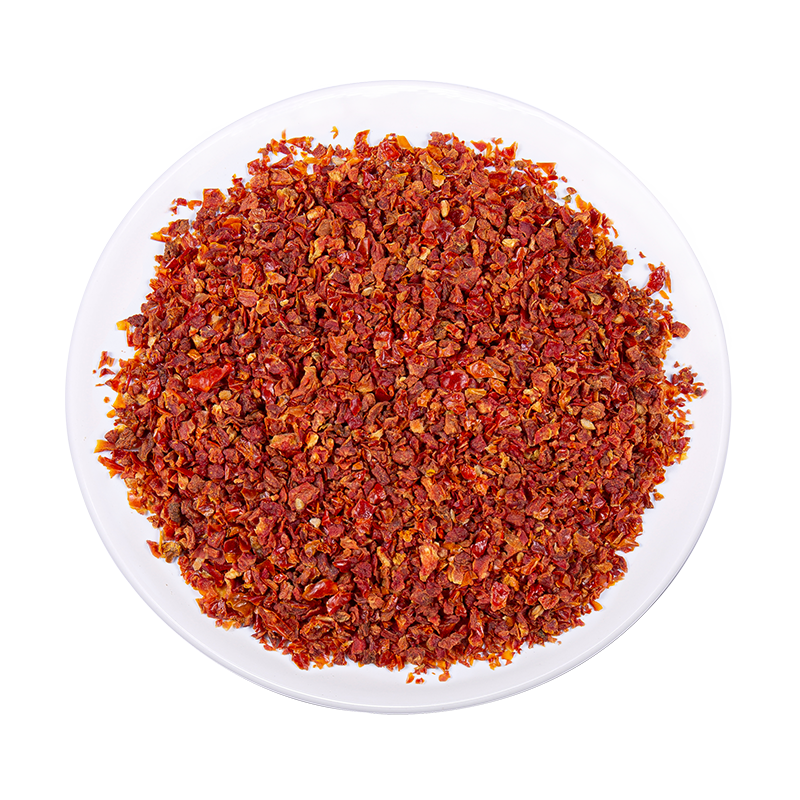
At our Inner Mongolia facility, green and red peppers are grown close to the processing line, washed, sliced, and dried under controlled temperatures so the final ingredient keeps its natural color and rehydrates quickly. If you are developing soups, sauces, or seasoning blends, dehydrated red pepper holds its color and texture well in hot applications. For a milder base that still carries a clean vegetable note, dehydrated green pepper is a dependable choice. When the formula needs moderate heat without the storage challenges of fresh chilies, dehydrated jalapeno offers consistent pungency with a slightly fruity edge.
Storing your dehydrated peppers
Fully dried peppers need protection from the two things that degrade them: moisture and oxygen. Keep them whole whenever possible, because grinding increases surface area and shortens shelf life. A sealed glass jar in a dark cabinet will keep whole dried peppers in good condition for 12 to 18 months. For longer storage, add an oxygen absorber to the jar and keep the container full.
If you do grind a batch into flakes or powder, label the jar with the date and store it away from the stove, where heat and steam will shorten its life. The drying temperature is the part you cannot fix later, so start at 135°F, test the texture, condition the batch, and your stored peppers will stay usable for a year or more.