English
 Français
 Español

Jun 02,2026
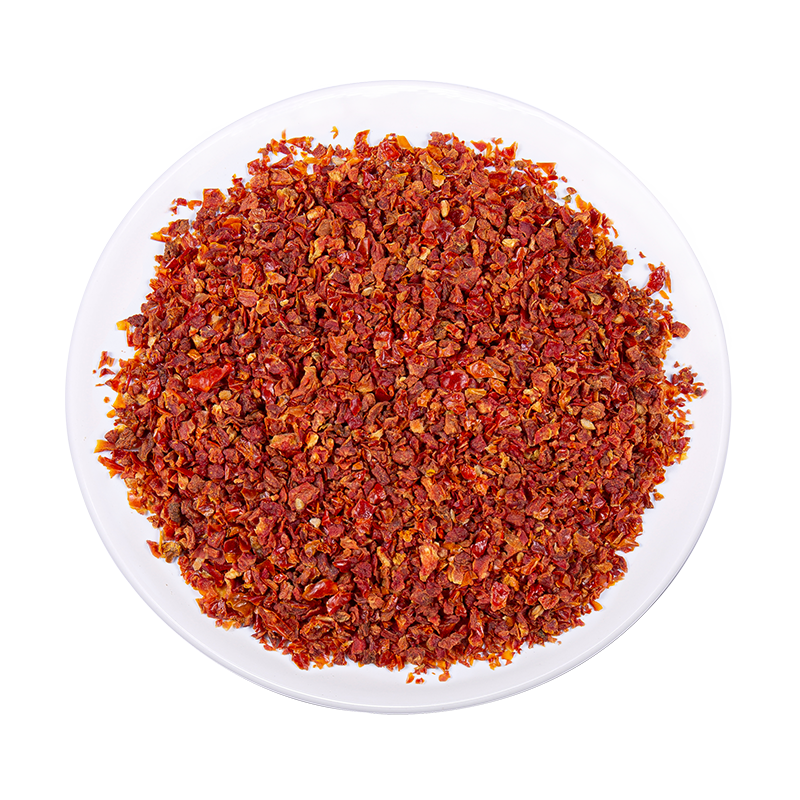
Dehydrated Tomato consistently outperforms fresh tomatoes in industrial applications that require long shelf life, easy storage, and consistent flavor intensity. While fresh tomatoes are often limited by spoilage and transport challenges, dehydrated tomato provides a stable and versatile ingredient for sauces, soups, seasoning blends, and ready-to-eat meals. Industries benefit from reduced waste, predictable nutrition, and lower transportation costs when using dehydrated tomato instead of fresh tomatoes.
Extended Shelf Life and Reduced Waste
One of the primary industrial advantages of dehydrated tomato is its long shelf life. Fresh tomatoes can spoil within 5-7 days at ambient temperature, leading to significant loss for manufacturers. By contrast, dehydrated tomato can remain stable for up to 12 months when stored under proper conditions. This stability allows manufacturers to purchase in bulk and reduce frequent restocking, significantly cutting logistics costs.
For example, a standard industrial batch of tomato-based soup can use dehydrated tomato rehydrated with water or broth. This method ensures consistent color and flavor while preventing spoilage during storage. In contrast, fresh tomatoes often require rapid processing or refrigeration, increasing energy and operational costs.
Consistency in Flavor and Nutritional Content
Industrial applications demand reliable taste and nutrient retention. Dehydrated tomato provides a concentrated flavor profile, which can be standardized across large-scale production. Unlike fresh tomatoes, whose flavor varies based on season, origin, and ripeness, dehydrated tomato offers predictable acidity, sweetness, and umami, critical for sauces, seasoning mixes, and ready-to-eat meals.
From a nutritional perspective, dehydrated tomato retains key antioxidants like lycopene and vitamin C during controlled dehydration processes. While fresh tomatoes offer similar nutrients initially, degradation occurs rapidly after harvesting. Using dehydrated tomato ensures that products consistently meet nutritional labeling requirements.
Efficiency in Transportation and Storage
Transporting fresh tomatoes is often expensive due to their high water content and susceptibility to damage. In contrast, dehydrated tomato is lightweight and compact, reducing transportation volume and costs by over 80%. This reduction is especially valuable for manufacturers sourcing tomatoes internationally or distributing products nationwide.
Storage requirements also differ significantly. Fresh tomatoes need refrigeration or controlled atmosphere storage, while dehydrated tomato can be stored at room temperature without quality loss. Industries that integrate food dehydrator sun dried tomatoes processes find it easier to manage inventory, as the risk of spoilage is minimal.
Versatility in Industrial Food Formulations
Dehydrated tomato is highly versatile in industrial applications. It can be rehydrated to mimic fresh tomato texture in soups, sauces, and stews or ground into powder for dry seasoning blends. For example:
- Tomato powder for instant pasta sauces.
- Inclusion in spice blends for snack foods.
- Rehydrated chunks for ready-to-eat meals.
- Integration into tomato paste concentrates for industrial cooking lines.
This flexibility allows manufacturers to adapt dehydrated tomato across multiple product lines without adjusting processing protocols for each batch of fresh tomatoes.
Comparative Data: Dehydrated vs Fresh Tomato in Industrial Use
| Parameter | Dehydrated Tomato | Fresh Tomato |
|---|---|---|
| Shelf Life | 12 months | 5-7 days |
| Storage Needs | Room temperature | Refrigeration |
| Transport Cost | 80% lower | High |
| Flavor Consistency | High | Variable |
| Nutrient Retention | Stable | Degrades quickly |
Integration with Food Dehydrator Sun Dried Tomatoes Techniques
Industrial production of dehydrated tomato often involves advanced drying systems such as hot air drying, vacuum drying, or hybrid dehydration technologies. In many facilities, food dehydrator sun dried tomatoes methods are used as a benchmark for achieving deep flavor concentration and moisture reduction efficiency. These processes are particularly valuable in large-scale manufacturing where consistency is essential.
Compared to traditional sun drying, controlled dehydration allows manufacturers to reduce microbial risks by up to 95%, ensuring food safety standards required in industrial environments. This makes dehydrated tomato more reliable than naturally sun-dried or fresh tomatoes, especially in export-oriented production systems.
Additionally, industrial dehydration systems can process large volumes efficiently. A single industrial dehydrator can process approximately 500–2000 kg of fresh tomatoes per batch, yielding concentrated dehydrated output that can be stored or milled into powder for seasoning applications.
Applications in Ready-to-Eat and Convenience Foods
The convenience food industry heavily relies on dehydrated tomato due to its stability and ease of use. Products such as instant noodles, microwaveable pasta dishes, and dehydrated soup mixes benefit significantly from its long shelf life and strong flavor profile.
For instance, a typical instant pasta sauce mix may include:
- Tomato powder derived from dehydrated tomato (40–60% composition)
- Herb and spice blend (20–30%)
- Thickening agents (10–15%)
- Flavor enhancers (remaining percentage)
Using fresh tomatoes in such formulations would require refrigeration, rapid processing, and stabilizers, making production significantly more expensive and less scalable.
Role in Seasoning, Snacks, and Dry Mix Industries
One of the fastest-growing applications of dehydrated tomato is in seasoning blends and snack manufacturing. Its concentrated umami flavor enhances chips, crackers, and savory coatings. Unlike fresh tomatoes, which introduce moisture and reduce product shelf stability, dehydrated tomato ensures dry consistency and long-lasting crunch.
Snack manufacturers often prefer tomato-based seasoning powders because they can be evenly distributed, ensuring uniform flavor intensity across millions of units. This is especially important in mass production environments where consistency defines product quality.
Cost Efficiency and Industrial Scalability
From a financial perspective, dehydrated tomato offers significant cost advantages. Although initial processing requires energy, the reduction in spoilage, transportation, and storage costs leads to long-term savings of 20–40% in many industrial applications.
Fresh tomatoes require cold chain logistics, which increases operational complexity. In contrast, dehydrated tomato simplifies supply chain management, allowing companies to scale production globally without significant infrastructure investments.
Across multiple sectors—including convenience foods, seasoning manufacturing, and institutional catering—dehydrated tomato consistently demonstrates superior performance compared to fresh tomatoes. Its advantages in shelf life, transportation efficiency, flavor stability, and safety make it an essential ingredient in modern food processing.
When combined with advanced drying technologies such as food dehydrator sun dried tomatoes systems, industries can achieve highly efficient, scalable, and cost-effective production models. As global demand for processed foods continues to grow, the role of dehydrated tomato is expected to expand even further.