English
 Français
 Español

Jul 29,2026
INGREDIENT GUIDE
Two forms, one vegetable — understanding the transformation
Dried green peppers are fresh green peppers that have had nearly all of their internal water content removed through heat, air, or sun exposure, transforming a crisp, juicy vegetable into a lightweight, concentrated ingredient with a longer shelf life. The key difference from fresh peppers is that drying reduces water content from roughly 90% down to under 10%, which intensifies flavor, changes texture from crunchy to leathery or brittle, and extends usability from about one week to over a year.
The Drying Process Explained
Drying green peppers works by applying controlled heat and airflow to draw moisture out of the flesh without cooking it. As water evaporates, the pepper's cell structure collapses inward, causing the pepper to shrink dramatically in size and weight. A single fresh green bell pepper weighing around 120 grams may shrink to just 10 to 15 grams once fully dehydrated, since nearly all of its water has been removed.
There are several common methods used to produce a dried green bell pepper, each affecting the final texture and color slightly differently.
Sun Drying
Sun drying is the oldest method and relies on ambient heat and airflow over several days. It produces a chewy, slightly darker pepper due to prolonged sun exposure, but it requires a hot, dry climate and is more vulnerable to contamination from dust or insects if not properly covered.
Oven Drying
Oven drying uses low, consistent heat, typically between 135°F and 160°F, over several hours. This method is faster and more controlled than sun drying, producing a more uniform color and texture, though it uses more energy.
Dehydrator Drying
A food dehydrator circulates warm air at a steady, low temperature, usually around 125°F to 135°F. This is widely considered the most reliable method for home use since it preserves color and nutrients better than sun drying while using less energy than an oven.
Key Differences in Texture and Appearance
The most immediately noticeable difference between a fresh pepper and its dried counterpart is texture. Fresh green peppers are crisp, snap easily when bent, and release moisture when cut. Once dried, the same pepper becomes leathery, brittle, or even crumbly depending on how thoroughly it was dehydrated.
Dried green pepper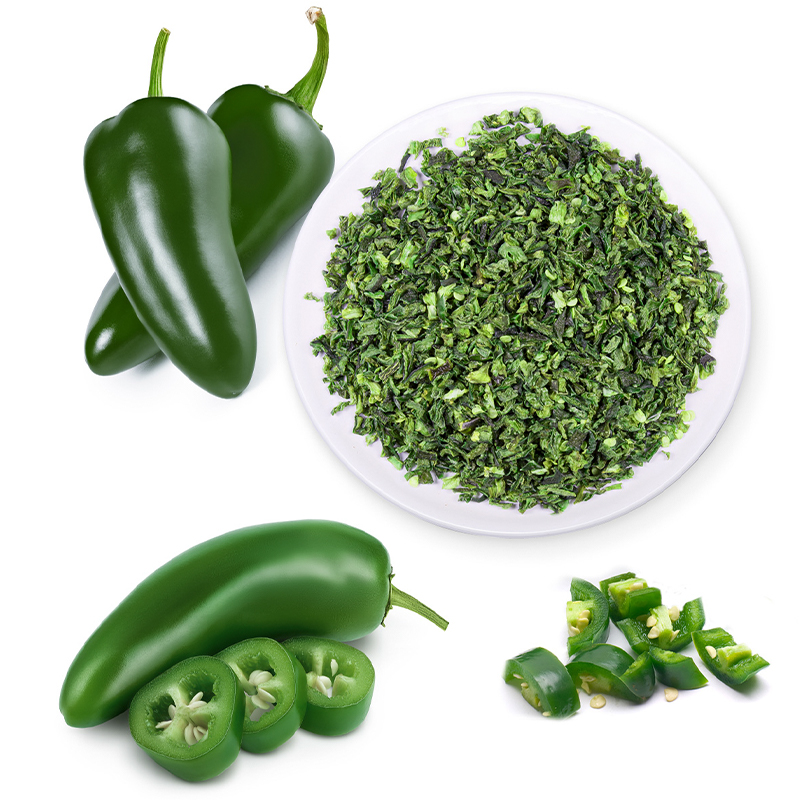
Color shifts during drying — a vivid, glossy green fades to a duller, olive-brown tone as chlorophyll breaks down under heat.
This color change is a normal part of the drying process and does not indicate spoilage as long as no mold or unusual discoloration is present.
Flavor Concentration After Drying
Removing water from a pepper does not remove flavor compounds; instead, it concentrates them into a smaller volume. This is why dried green peppers often taste noticeably more intense and earthy compared to their fresh form, which tends to taste lighter, grassier, and more watery by comparison.
Because flavor becomes concentrated, recipes typically call for less dried pepper than fresh pepper to achieve a similar taste impact. A common substitution ratio is about one tablespoon of dried, rehydrated pepper for every one-third cup of chopped fresh pepper, though this can vary depending on the specific dish and desired intensity.
Nutritional Differences Between Dried and Fresh Peppers
Drying concentrates most nutrients on a per-gram basis, since water is removed but the remaining vitamins, minerals, and fiber stay largely intact. However, some heat-sensitive nutrients, particularly vitamin C, degrade somewhat during the drying process due to prolonged exposure to warm air.
| Nutrient (per 100g) | Fresh Green Pepper | Dried Green Pepper |
|---|---|---|
| Water Content | ~94% | ~8–10% |
| Calories | ~20 kcal | ~280–320 kcal |
| Vitamin C | High | Reduced by 40–60% |
| Fiber | Moderate | Concentrated, higher per gram |
Because dried peppers are calorie-dense per gram due to water removal, portion sizes used in cooking are naturally much smaller than fresh pepper portions, which helps balance out the apparent calorie difference in a finished dish.
How Shelf Life Differs Between Fresh and Dried Peppers
Fresh green peppers typically last only about one to two weeks when refrigerated before they begin to soften, wrinkle, or develop soft spots. In contrast, a properly dried green bell pepper stored in an airtight container in a cool, dark place can last 12 to 24 months without significant flavor or quality loss.
When to Use Fresh Peppers Instead of Dried
Fresh peppers remain the better choice in situations where crunch, moisture, and bright color matter to the finished dish. Consider using fresh peppers instead of dried in the following cases:
- Raw preparations such as salads, salsas, or crudité platters.
- Stir-fries where a crisp texture is desired.
- Stuffed pepper recipes that rely on the pepper's structural shape.
- Dishes where visual presentation of glossy, vivid green color matters.
When to Use Dried Peppers Instead of Fresh
Dried peppers shine in situations where long cooking times, concentrated flavor, or extended storage are priorities. Good use cases include:
- Soups, stews, and braises where the pepper has time to rehydrate and release flavor slowly.
- Spice blends, rubs, or ground seasoning powders that require a shelf-stable ingredient.
- Sauces and marinades where a concentrated pepper flavor is desired without added moisture.
- Backpacking, camping, or emergency food supplies where lightweight, long-lasting ingredients are essential.
Rehydrating Dried Peppers to Approximate Fresh Texture
Although dried peppers cannot fully replicate the crunch of a fresh pepper, soaking them in warm water for 15 to 30 minutes softens the flesh and restores much of its original shape and pliability, making it suitable for use in cooked dishes. The soaking liquid itself often absorbs concentrated pepper flavor and can be reused as a base for soups or sauces rather than discarded.
Final Comparison: Fresh vs. Dried Green Peppers
Understanding the differences between fresh and dried green peppers ultimately comes down to matching the ingredient to the recipe's needs. Fresh peppers offer crunch, moisture, and bright color, making them ideal for raw or lightly cooked dishes. A dried green bell pepper, on the other hand, offers concentrated flavor, a long shelf life, and convenience, making it better suited for slow-cooked dishes, seasoning blends, and long-term food storage.
Neither form is inherently better than the other — they simply serve different culinary purposes. Keeping both fresh and dried green peppers on hand allows cooks to choose the right texture and flavor profile depending on what a particular recipe calls for, while also taking advantage of the extended shelf life that drying provides during periods of pepper abundance.