English
 Français
 Español

Ingredient Notes — Field Guide
The Pod and the Flake
Two forms of the same chili, separated by a single mechanical step — and everything that step changes about heat, texture, and time.
A dried red chile pepper begins its life the same way, whether it ends up whole in a simmering pot or scattered across a pizza. The difference is not the pepper itself — it's what happens to it after drying.
Once moisture drops below roughly 10–12%, the pod is stable enough to store for a year or more. From that single stable point, two paths diverge: leave the pod intact, or break it apart. That fork in the process is the entire story of dried red pepper versus crushed red pepper.
Whole Pod, Slow Release
Left intact, the dried hot red peppers pod holds its seeds and membrane inside a sealed skin. Heat doesn't escape quickly — it has to be coaxed out, through simmering, soaking, or slicing. This is why whole pods dominate slow-cooked dishes: braises, stocks, oils steeped over days.
A whole pod doesn't season a dish. It negotiates with it, slowly, over time.
Cooks who want restraint — heat that builds rather than announces itself — reach for the whole pod almost by instinct.
Crushed, Immediate, Unforgiving
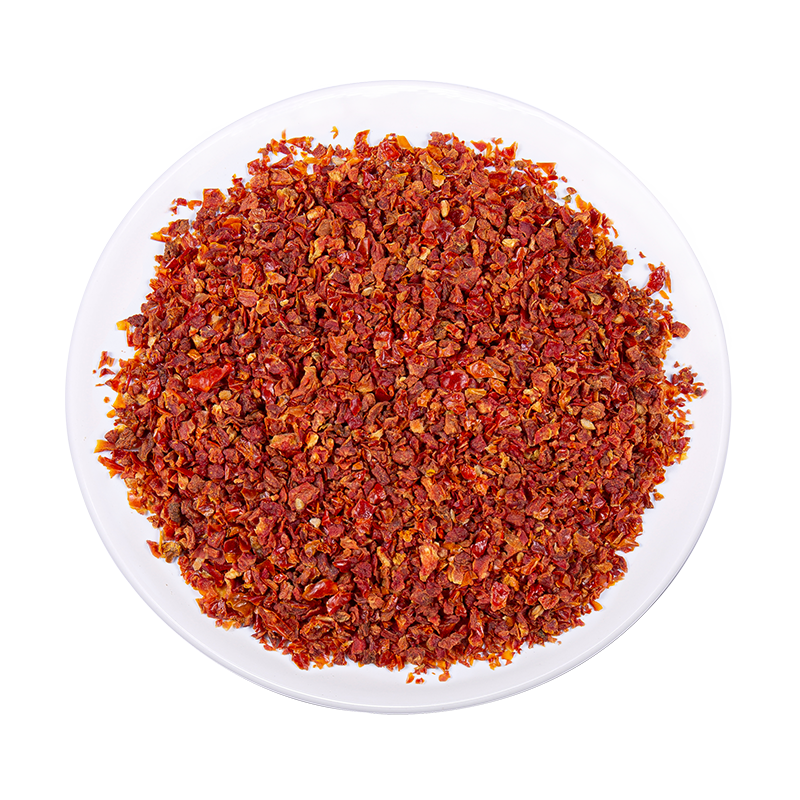
Grinding changes the physics entirely. Once broken into flakes of roughly 2–4mm, the seed and flesh sit exposed on the surface — no waiting, no steeping. Crushed red pepper delivers heat on contact, which is exactly why it lives in shakers on restaurant tables rather than in stockpots.
Because more surface area is exposed to air and light, crushed red pepper loses potency faster than whole pods — often 20–30% of its pungency within six months under normal storage.
Side by Side
| Attribute | Whole Dried Red Pepper | Crushed Red Pepper |
| Form | Intact pod | Broken flakes with seeds |
| Shelf Life | 12–24 months | 6–12 months |
| Heat Release | Gradual | Immediate |
| Typical Use | Braises, infused oils, stocks | Pizza, pasta, table seasoning |
Choosing Between Them
- Reach for the whole pod when a dish needs slow, removable heat — soups, braises, anything simmered for hours.
- Reach for crushed pepper when timing matters — finishing a dish just before it reaches the table.
- Store whole pods in a dark, airtight container for maximum longevity.
- Store crushed pepper cold, ideally refrigerated, to slow the oxidation of exposed surfaces.
Substituting crushed pepper for whole pods in long-simmered dishes can overwhelm a recipe — the heat releases far faster than most recipes anticipate.
When a recipe calls for "dried red pepper" without further detail, it is almost always referring to the whole pod form of a dried red chile pepper.
In Short
Whole and crushed are not competing products — they're two stages of the same ingredient, suited to two different kinds of patience. One rewards time. The other rewards immediacy. Knowing which one a recipe is quietly asking for is often the difference between a dish that tastes intentional and one that simply tastes hot.