English
 Français
 Español

Apr 30,2026
Dehydrated Potato Is Largely Pre-Gelatinized; Fresh and Freeze-Dried Are Not
The most important distinction between dehydrated potato and its fresh or freeze-dried counterparts is the state of starch gelatinization at the point of use. Drum-dried dehydrated potato flakes typically achieve 85–98% starch gelatinization during processing, meaning the starch granules have already absorbed water, swollen, and partially or fully lost their crystalline structure before the product ever reaches the end user. Fresh potato contains completely native, ungelatinized starch (0% gelatinization), while freeze-dried potato occupies a unique middle position — its starch gelatinization level depends entirely on whether the potato was cooked before freeze-drying, ranging from near 0% (raw freeze-dried) to over 90% (cooked freeze-dried). This difference in starch state has profound implications for rehydration speed, texture, digestibility, and suitability across food applications.
Understanding Starch Gelatinization: What It Means and Why It Matters
Starch gelatinization is the irreversible process by which starch granules — composed of amylose and amylopectin — absorb water under heat, swell, and lose their semicrystalline structure. In potato, this transition occurs between 58°C and 68°C, a relatively low gelatinization temperature range compared to cereal starches like corn (62–72°C) or wheat (58–64°C).
Gelatinization is measurable using differential scanning calorimetry (DSC), which quantifies the enthalpy of gelatinization (ΔH) — the heat energy absorbed as crystalline starch structures melt. Fully native (ungelatinized) potato starch has a ΔH of approximately 14–18 J/g, while fully gelatinized starch has a ΔH near 0 J/g. The degree of gelatinization (DG%) is therefore calculated as the reduction in ΔH relative to the native starch baseline, and this single metric determines much of a dehydrated potato product's functional behavior.
Why does this matter practically? Because the degree of gelatinization controls:
- How quickly and completely the product rehydrates in cold or hot water
- The texture of the reconstituted product (smooth and cohesive vs. grainy and firm)
- Digestibility and glycemic response in the final food product
- Binding and thickening performance in soups, sauces, and extruded snacks
- Retrogradation tendency and resistant starch formation during cooling
Starch Gelatinization in Fresh Potato: The Native Baseline
Fresh, raw potato contains starch in its fully native crystalline state, with zero gelatinization. The starch granules in fresh potato are large (15–75 µm), oval-shaped, and densely packed within parenchyma cells. In this state, the starch is only partially digestible by amylases and has a firm, almost chalky texture when consumed raw.
Cooking fresh potato — whether by boiling, steaming, baking, or frying — triggers gelatinization and transforms the texture to the familiar soft, cohesive quality consumers expect. The cooking step is therefore non-negotiable for fresh potato to become palatable and fully digestible. This stands in direct contrast to drum-dried dehydrated potato flakes, which require only rehydration with hot water (or even warm water) to achieve an equivalent result, precisely because gelatinization has already occurred during manufacture.
Fresh potato also contains a significant proportion of resistant starch (RS2) — native granular starch resistant to enzymatic digestion — estimated at 3–8% of total starch on a dry weight basis. This fraction is largely destroyed upon cooking and gelatinization.
dehydrated potato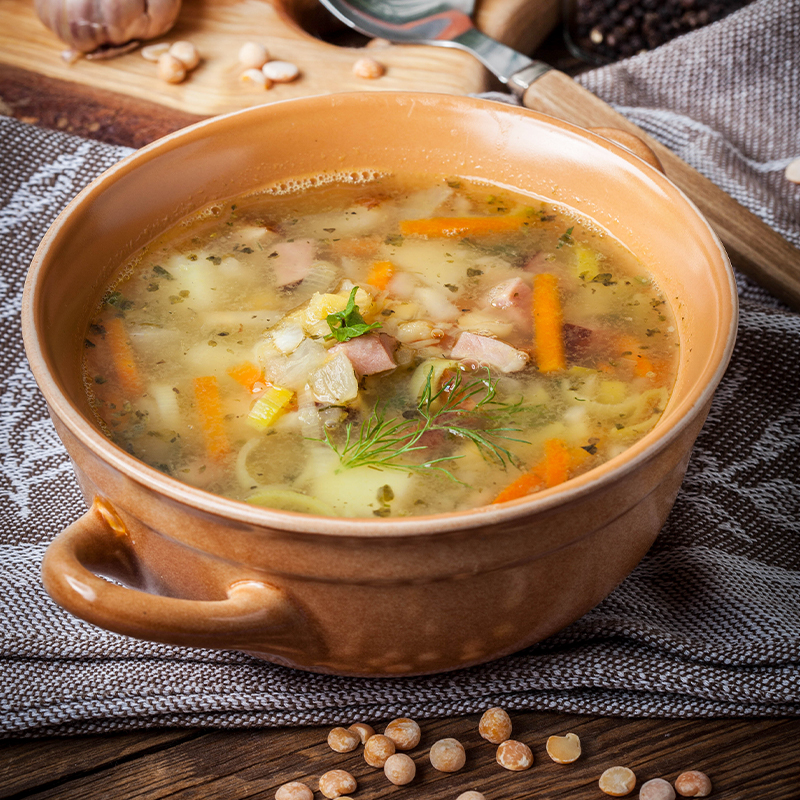
Starch Gelatinization in Dehydrated Potato: Process-Dependent and High
Drum-Dried Potato Flakes
Drum drying is the dominant commercial process for potato flakes. Cooked, mashed potato is spread as a thin layer onto a steam-heated drum at 130–160°C surface temperature, dried within 20–30 seconds, and scraped off as a thin sheet that is subsequently broken into flakes. The combination of pre-cooking and drum drying results in a degree of gelatinization consistently above 90%, and often reaching 95–98% in well-controlled operations.
This near-complete gelatinization means drum-dried potato flakes rehydrate almost instantaneously in hot water (80–100°C) and within 3–5 minutes in warm water (50–60°C). The reconstituted product closely replicates the texture of freshly mashed potato, making it the preferred format for instant mashed potato, soup thickeners, snack extrusion, and bakery applications.
Spray-Dried Potato Granules
Potato granules produced via the add-back process (where a portion of dried granules is re-incorporated into fresh mash before drying) typically achieve 80–92% gelatinization. The add-back step promotes starch retrogradation, which creates a partially recrystallized starch network that gives granules better particle integrity and slower — but still rapid — rehydration compared to flakes.
Hot-Air Dried Potato Slices and Dices
For dehydrated potato slices or dices dried by hot air (typically at 60–85°C), the degree of gelatinization is more variable — ranging from 40–75% — depending on whether the product is blanched or pre-cooked before drying. Blanched-only slices will have partial gelatinization, while pre-cooked slices approach levels comparable to flakes. These formats require longer rehydration times (10–20 minutes in boiling water) and produce a firmer, more piece-like texture suitable for soups and stews rather than mashed applications.
Starch Gelatinization in Freeze-Dried Potato: Determined by Pre-Processing State
Freeze-drying itself does not cause starch gelatinization. The process — sublimating ice under high vacuum at temperatures below -40°C — preserves the structural state of the starch exactly as it existed before freezing. Therefore, the gelatinization level in freeze-dried potato is entirely a function of whether the potato was raw or cooked prior to freeze-drying:
- Raw freeze-dried potato: Retains native starch structure, DG% ≈ 0–5%. Requires full cooking after rehydration to be palatable.
- Blanched freeze-dried potato: Partial gelatinization, DG% ≈ 30–55%. Improved texture on rehydration but still requires further cooking for optimal quality.
- Cooked freeze-dried potato (e.g., freeze-dried mashed or diced cooked potato): High gelatinization, DG% ≈ 85–95%. Rehydrates rapidly and requires no further cooking — directly comparable to drum-dried flakes in functional terms.
The key advantage freeze-drying offers is superior structural preservation of cell walls and texture fidelity upon rehydration — particularly for piece-form products like slices and dices — because ice crystal formation is minimized by rapid freezing and the sublimation process avoids liquid-phase transitions that cause cell collapse. However, this structural advantage comes at a cost: freeze-dried potato typically costs 4–8 times more per kilogram than drum-dried dehydrated potato flakes, limiting its use to high-value applications such as military rations, premium camping food, and specialty ingredient markets.
Side-by-Side Comparison: Gelatinization and Functional Properties
| Property | Fresh Potato (Raw) | Dehydrated Potato Flakes | Freeze-Dried Potato (Cooked) | Freeze-Dried Potato (Raw) |
|---|---|---|---|---|
| Degree of Gelatinization (%) | 0 | 90–98 | 85–95 | 0–5 |
| Rehydration Time (hot water) | Requires cooking (15–25 min) | <3 min | 3–8 min | Requires cooking (15–20 min) |
| Texture After Rehydration | N/A (raw) | Smooth, mash-like | Firm, piece-intact | Firm, requires cooking |
| Resistant Starch Content | High (RS2, 3–8%) | Low (RS3, <2%) | Low–Moderate | High (RS2) |
| Thickening Performance | High (after cooking) | High (instant) | Moderate | Low (until cooked) |
| Relative Cost (per kg dry) | Low | Moderate | Very High | Very High |
Application Guidance: Choosing the Right Format Based on Gelatinization Needs
The degree of starch gelatinization should be a primary selection criterion when specifying potato ingredients for different food applications:
- Instant soups, instant mashed potato, and convenience meals: Specify drum-dried dehydrated potato flakes with DG% ≥ 92% for fastest rehydration and smoothest texture.
- Snack extrusion and pellet production: Dehydrated potato flakes or granules with controlled gelatinization (85–92%) provide optimal expansion behavior in single-screw and twin-screw extruders.
- Soup and stew chunks requiring piece integrity: Cooked freeze-dried potato or hot-air dried pre-cooked dices offer gelatinized starch within a structurally intact piece format.
- Bakery and dough applications: Pre-gelatinized dehydrated potato flakes (DG% 90%+) act as moisture management agents and texture modifiers without requiring in-process cooking steps.
- Functional food and resistant starch applications: Raw freeze-dried potato or fresh potato provides native RS2 resistant starch; however, this is destroyed upon gelatinization, so processing conditions must be carefully controlled.
Starch gelatinization level is not merely a technical parameter — it is the functional fingerprint of a potato ingredient. Drum-dried dehydrated potato flakes lead all commercial formats in gelatinization degree (90–98%), enabling instant rehydration and superior thickening performance without any additional cooking. Fresh potato provides a native starch baseline ideal for traditional cooking applications but requires full thermal processing before use. Freeze-dried potato spans the full gelatinization spectrum depending on pre-processing, offering structural integrity advantages at significantly higher cost. For food manufacturers and procurement teams, specifying gelatinization degree — measured by DSC and expressed as DG% — alongside standard quality parameters is essential for ensuring ingredient functionality matches the demands of the intended application.