English
 Français
 Español

Apr 30,2026
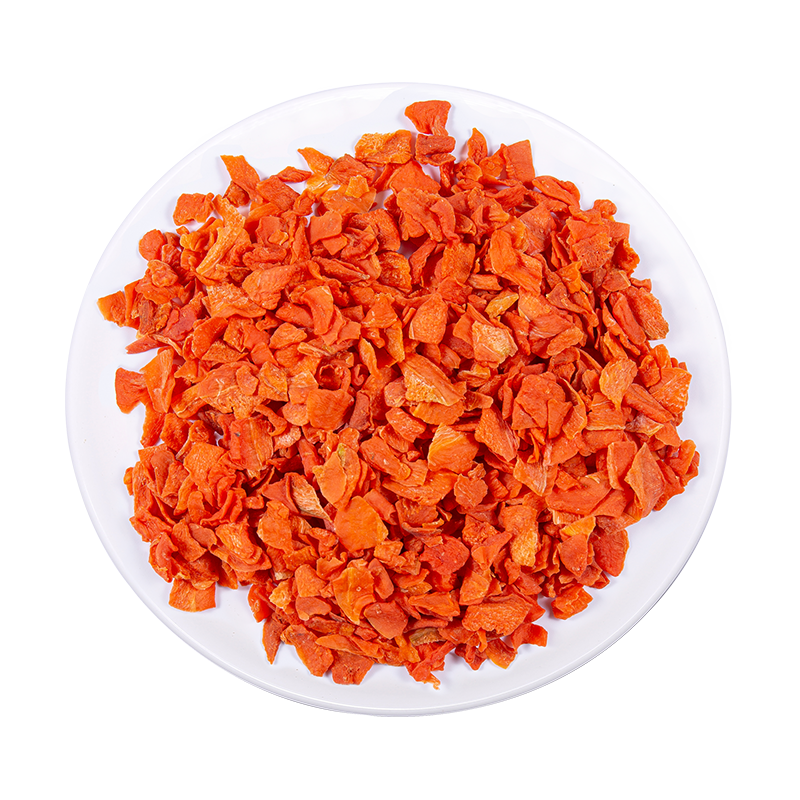
The dehydration process in Dehydrated Carrot generally preserves the fiber content effectively, but water-soluble vitamins like vitamin C experience significant reduction. Studies show that up to 85% of dietary fiber remains intact while vitamin C may drop by 50–70% depending on temperature and drying duration.
How Fiber in Dehydrated Carrot is Maintained
Dietary fiber, primarily cellulose and hemicellulose in carrots, is highly stable under dehydration conditions. Since fiber is not water-soluble, removing water from carrots does not chemically degrade it. As a result, Dehydrated Carrot retains nearly all of its original fiber content, making it a valuable ingredient for soups, baked goods, and snacks aimed at promoting digestive health.
Example: A 100g portion of fresh carrot contains roughly 2.8g of fiber. After dehydration, 100g of Dehydrated Carrot still contains approximately 2.4–2.5g of fiber, depending on moisture loss, which equates to 85–90% retention.
Impact on Water-Soluble Vitamins
Water-soluble vitamins such as vitamin C and some B vitamins are sensitive to heat and air exposure. During dehydration, exposure to high temperatures and oxygen can degrade these vitamins. For example, vitamin C content can decrease by 50–70% when carrots are dried at temperatures above 60°C for extended periods.
Vitamin B6 and folate also experience losses but are slightly more stable than vitamin C. Fat-soluble vitamins like A (as beta-carotene) are relatively well preserved, though some minor oxidation may occur.
Comparison Table of Nutrient Retention
| Nutrient | Content in Fresh Carrot | Content in Dehydrated Carrot | Retention Rate |
|---|---|---|---|
| Dietary Fiber | 2.8 g/100g | 2.4–2.5 g/100g | 85–90% |
| Vitamin C | 7.6 mg/100g | 2.3–3.8 mg/100g | 50–70% |
| Beta-Carotene (Vitamin A) | 835 µg/100g | 750–780 µg/100g | 90–95% |
Factors Influencing Nutrient Loss
Temperature
High drying temperatures accelerate water-soluble vitamin degradation. Low-temperature methods like freeze-drying can retain up to 90% of vitamin C.
Duration
Extended drying times increase oxidation and nutrient loss. Quick dehydration methods reduce exposure to oxygen and preserve vitamins more effectively.
Moisture Content
Lower final moisture content improves storage stability but may slightly accelerate degradation of sensitive vitamins if not properly packaged.
Practical Recommendations for Users
To maximize nutritional benefits of Dehydrated Carrot:
- Store in airtight containers away from direct sunlight to prevent vitamin degradation.
- Prefer low-temperature dehydration products or freeze-dried carrots for higher vitamin retention.
- Rehydrate quickly in hot water rather than prolonged soaking to preserve nutrients.
- Combine with vitamin C-rich ingredients when cooking to enhance antioxidant intake.
Dehydrated Carrot maintains nearly all of its fiber content but loses a substantial portion of water-soluble vitamins, particularly vitamin C. By choosing the right drying methods, storage conditions, and cooking practices, users can maximize the nutritional value of Dehydrated Carrot, making it a versatile and convenient source of dietary fiber and essential nutrients.